This article was updated on Feb 24, 2026.
From school assignments and work reports to personal letters and creative writing, word processing software sits quietly at the center of our digital lives. Yet for many beginners, opening a blank document can feel surprisingly intimidating. Where do you start? And how do you turn plain text into something polished?
This beginner’s guide is here to walk you through the basics of word processing software and show you how to choose the right tool for your needs. You’ll also discover how modern tools like MobiDocs make document creation faster and more accessible.
What is a word processor?
A word processor is a digital tool that allows you to create, edit, format, and store written documents on a computer, tablet, or smartphone. It replaces pen, paper, and typewriters with a flexible, interactive workspace.
When people ask “what is word processing?” or look for a clear word processing definition, they are usually referring to this process of using software to handle written content. This includes typing text, correcting errors, adjusting layouts, inserting images, and preparing files for sharing or printing.
Popular word processing software examples include Microsoft Word, Google Docs, Apple Pages, and MobiDocs. These tools combine simple writing with formatting, collaboration, and file management – essential for modern communication.
The basics of word processing software
Before exploring advanced tools, it helps to understand the foundation of how word processing programs work.
Which word processor should you use?
Among the many word processing programs available today, each designed for different users and budgets, let’s look at the ones more suitable for beginners:
Microsoft Word: A powerful industry standard with extensive features.
Google Docs: A free, cloud-based tool ideal for collaboration.
Apple Pages: A clean, user-friendly option for Apple users.
MobiDocs: A flexible and affordable alternative with strong compatibility and cross-device support.
If you value simplicity, affordability, and compatibility, MobiDocs is a practical choice for both individuals and teams.
Understanding the interface
Most word processing software shares a similar layout:
Menus: Use commands like saving, printing, and formatting.
Toolbars: With quick access to easy-to-use tools such as bold, font size, and alignment.
Workspace: The main area where you write and edit your document.
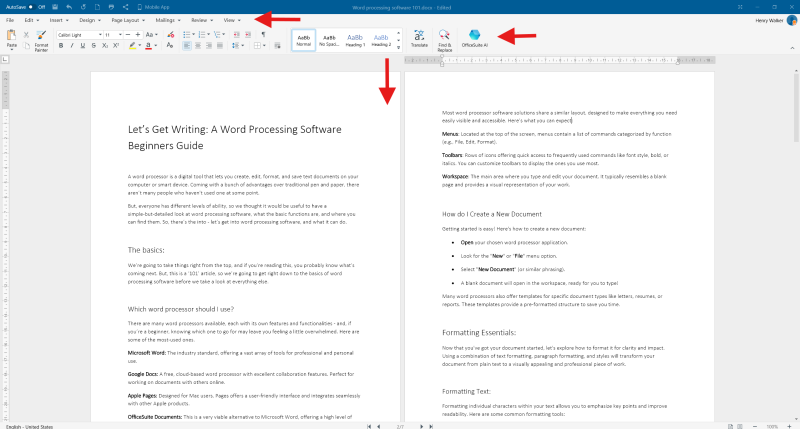
Once you understand this structure, navigating any word processing program becomes much easier.
Creating a New Document
To start writing:
Open your word processor.
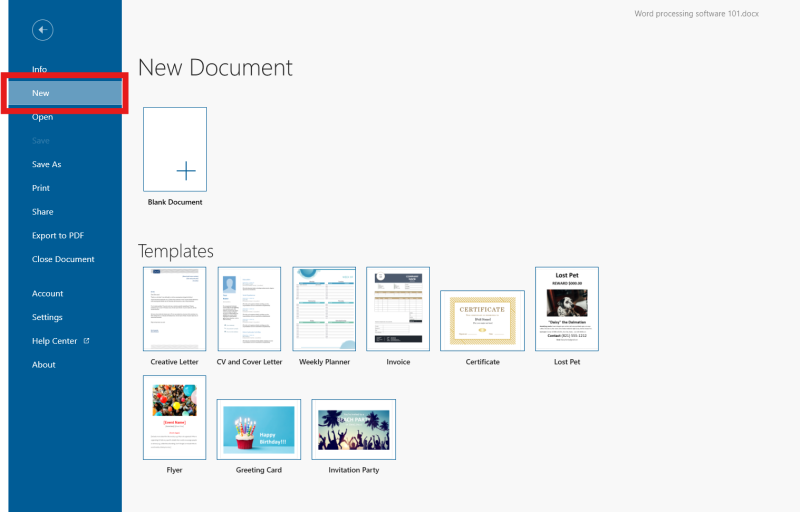
Select New Document from the menu.
Choose a blank page or a template.
Begin typing!
Templates are especially helpful for beginners, as they provide ready-made layouts for resumes, letters, and reports.
Formatting your documents
Formatting transforms simple text into clear, readable, and professional content.
Text formatting
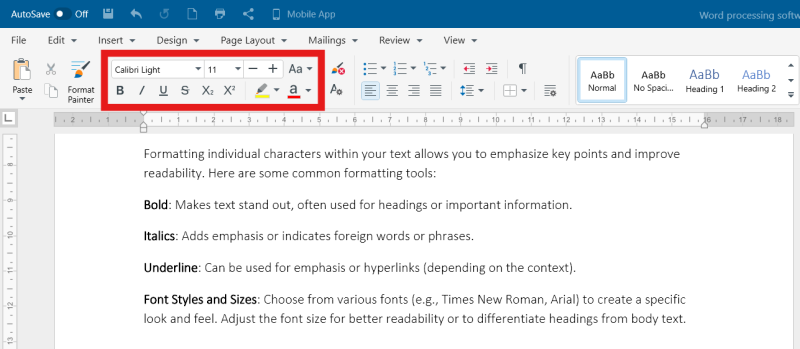
You can highlight important information using:
Bold for emphasis
Italics for tone or references
Underlining for links
Different fonts, sizes, and colors
Paragraph formatting
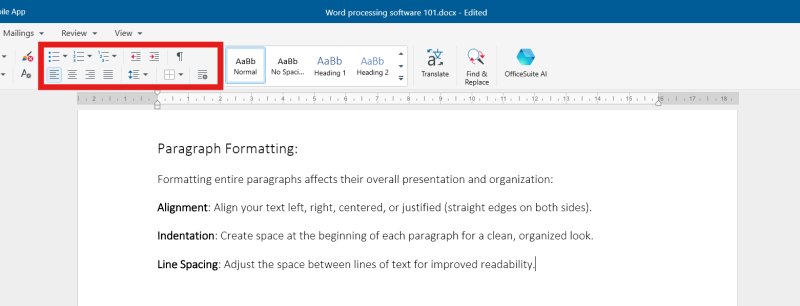
Adjusting paragraphs improves readability:
Alignment: left, right, center, or justified
Indentation for structure
Line spacing for comfort
Applying styles
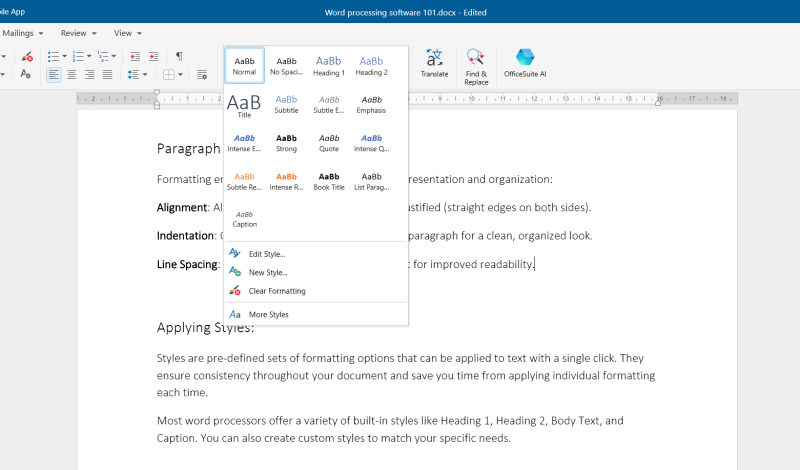
Styles apply consistent formatting to headings and body text. Using styles helps keep long documents organized and visually balanced.
Most word processors offer a variety of built-in styles like Heading 1, Heading 2, Body Text, and Caption. You can also create custom styles to match your specific needs.
Editing and enhancing your work
Word processing software makes editing fast and flexible.
Cut, copy, and paste
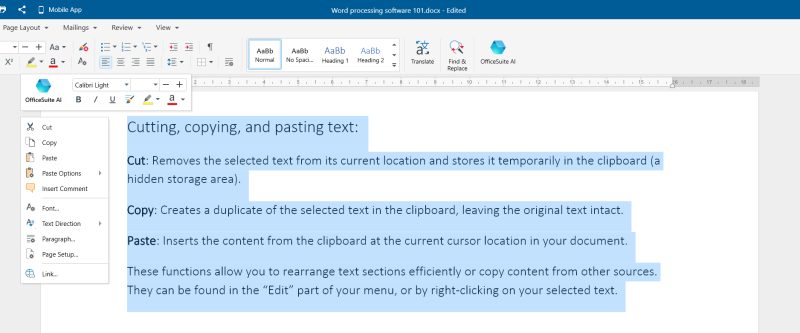
These core tools let you move and reuse text easily using keyboard shortcuts like Ctrl+C, Ctrl+V, and Ctrl+X.
Find and replace
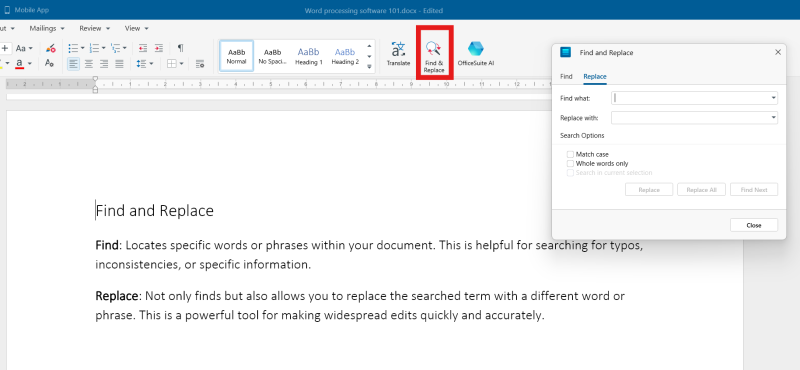
Find and Replace helps you quickly update repeated words or correct mistakes across the entire document.
Images, tables, and layouts
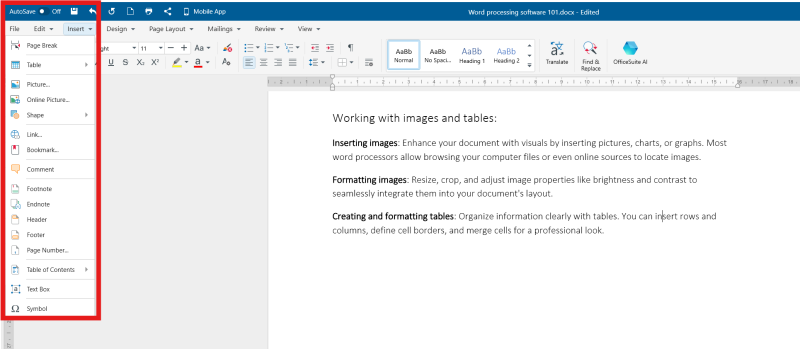
You can insert images, charts, and tables to support your content and improve presentation, especially for reports and projects.
Templates
Save time and effort by using pre-designed templates, with pre-formatted layouts for specific document types. You can usually find these under the “File” menu, where you’ll then need to click on “New”, or when you open a new, blank document.
Undo and redo
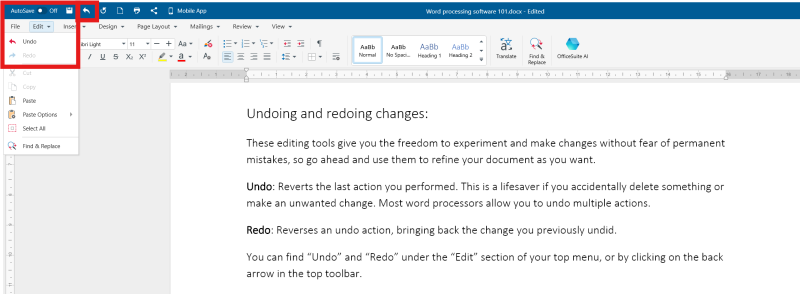
These editing tools give you the freedom to experiment and make changes without fear of permanent mistakes.
Undo: Reverts the last action you performed. This is a lifesaver if you accidentally delete something or make an unwanted change. Most word processors allow you to undo multiple actions.
Redo: Reverses an undo action, bringing back the change you previously undid.
You can find “Undo” and “Redo” under the “Edit” section of your top menu, or by clicking on the back arrow in the top toolbar.
Headers, footers, & lists
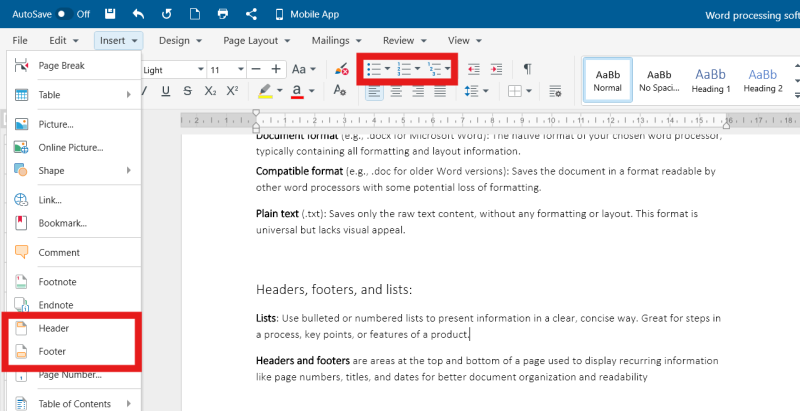
Lists: Use bulleted or numbered lists to present information in a clear, concise way. Great for steps in a process, key points, or features of a product.
Headers and footers are areas at the top and bottom of a page used to display recurring information like page numbers, titles, and dates.
Spellcheck and AI assistance
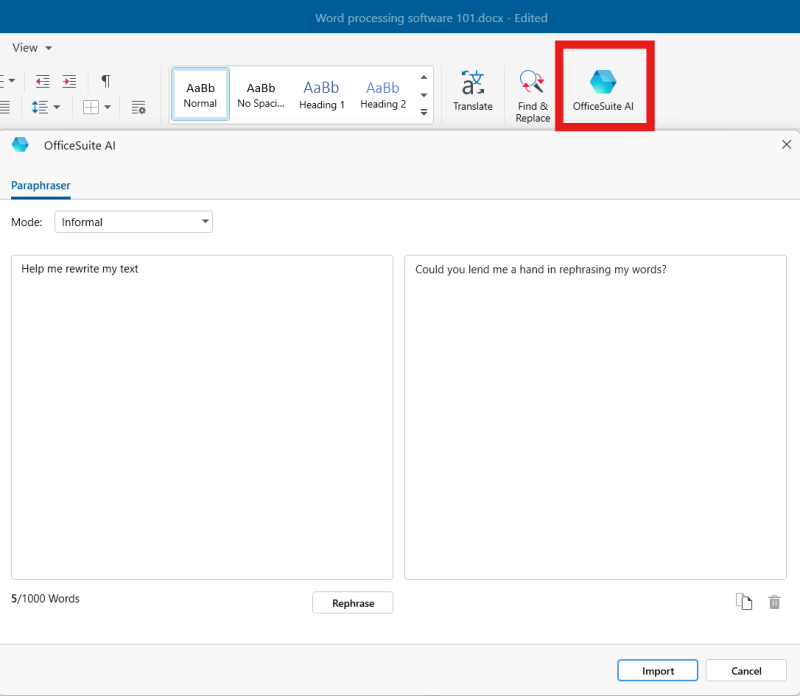
Most modern word processing programs include spellcheck and grammar tools. Some, like MobiDocs, also offer AI-powered writing assistance to help refine tone and clarity.
How to pick the right word processor
Choosing the right word processing software depends on your goals, budget, and working style.
For beginners, consider the following factors:
Ease of use: Look for a clean interface and simple navigation.
Compatibility: Make sure it supports common file formats like DOCX and PDF.
Price: Free or affordable tools are ideal for frugal users.
Collaboration: Cloud sharing and comments are essential for team projects.
Device support: Check if it works on desktop and mobile devices.
If you want a balance between simplicity, affordability, and professional features, MobiDocs is designed to meet these needs without unnecessary complexity.
Collaboration and sharing
Modern word processing software supports teamwork through cloud storage and shared links. You can:
Edit documents together in real time
Leave comments
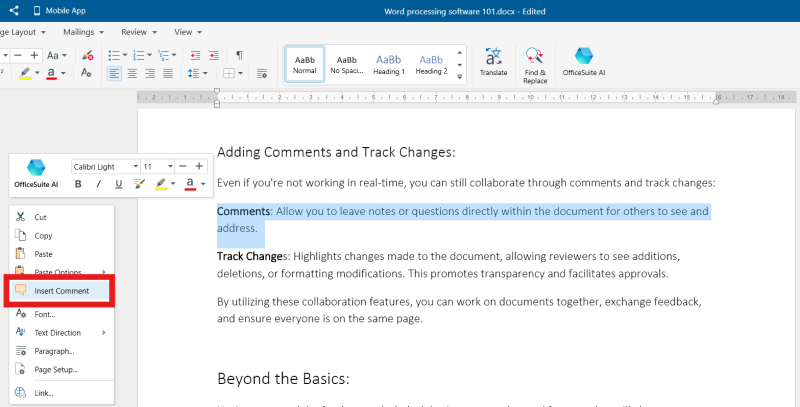
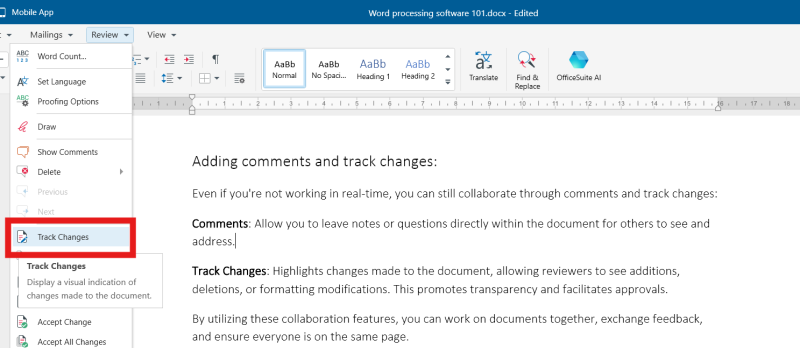
Use Track Changes
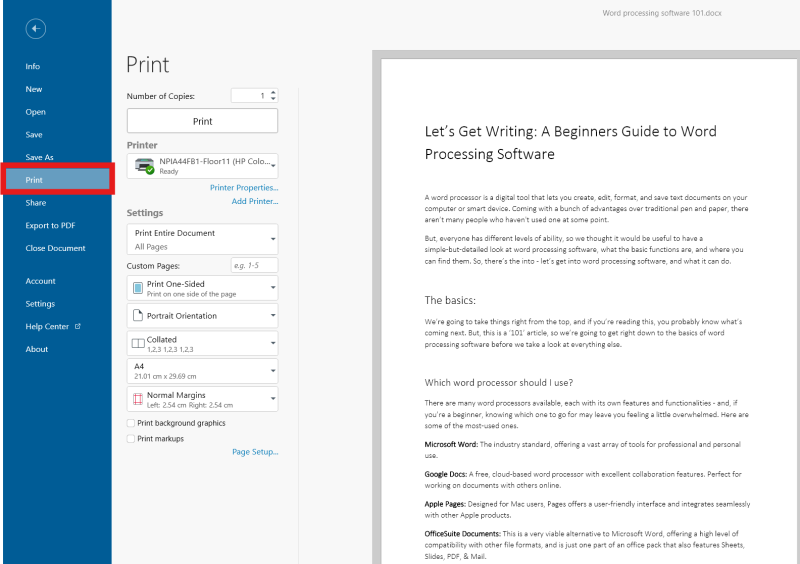
Printing - adjust margins, headers, and footers to ensure everything fits correctly on the page. You can often use a “Print Preview” function to visualize the layout before printing.
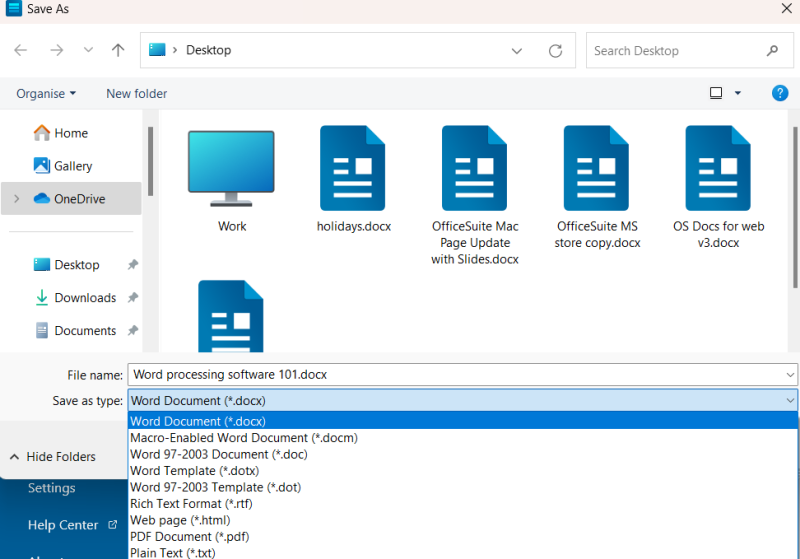
Export files as PDFs or Word documents by clicking “File” from your top menu, or using the shortcut Ctrl+S.
Tools like MobiDrive, Google Drive, and OneDrive make it easy to access your work anywhere.
Frequently asked questions
What is word processing software and what is it used for?
Word processing software is used to create, edit, format, and share written documents. It is commonly used for essays, reports, letters, resumes, and collaborative projects.
What is a word processing program and how does it work?
A word processing program is an application that provides tools for typing, formatting, and managing text. It works by combining a writing workspace with editing and layout features.
What is the difference between a word processor and word processing software?
A word processor usually refers to the individual program, while word processing software describes the broader category of tools used for document creation.
Which word processing program is best for beginners?
Beginners benefit most from programs that are simple, affordable, and compatible. Google Docs and MobiDocs are popular choices due to their ease of use and accessibility.
What should beginners look for in a word processing program?
Beginners should look for intuitive design, basic formatting tools, file compatibility, cloud support, and helpful templates.
Final thoughts
Learning how to use word processing software is an essential digital skill that opens doors to better communication, productivity, and creativity. With the right tools, even complete beginners can turn ideas into professional documents.
By choosing a reliable and user-friendly solution like MobiDocs, you can write, edit, and collaborate with confidence, without overspending or feeling overwhelmed.
Ready to get started?